
Colorado Springs Probate Archives
El Paso County probate court records document estate settlements for residents of Colorado's second-largest metropolitan area. The El Paso County Judicial Building in Colorado Springs maintains extensive files covering wills, estate administrations, guardianships, and conservatorships. As one of the busiest judicial districts in the state, the court processes a high volume of probate matters while maintaining organized record systems accessible to the public and legal professionals.
El Paso County Judicial Building Location
The El Paso County Judicial Building stands in downtown Colorado Springs. The address is 270 S Tejon Street, Colorado Springs, CO 80903. This central location serves the entire county. The court is part of the 4th Judicial District. It shares jurisdiction with Teller County.
Phone contact is at (970) 328-6373. This line connects to court services. Staff can direct your call. Probate questions are handled professionally. The large staff manages high volume efficiently.
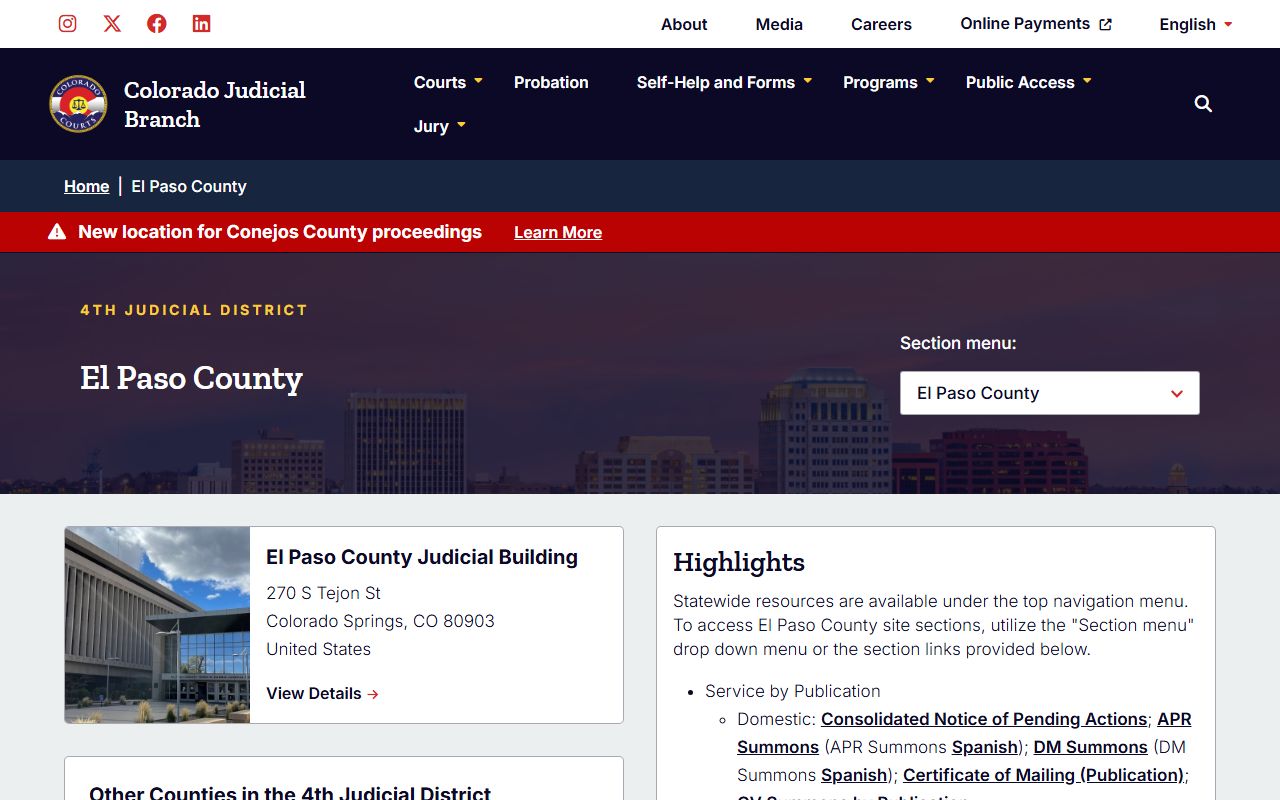
The El Paso County Judicial Building serves as the main courthouse for this populous Front Range county.
The county maintains multiple court websites. The main portal is at epcounty.com/courts. This site offers local information. Forms and resources are available. Check it for specific procedures. It complements the state Judicial Branch site.
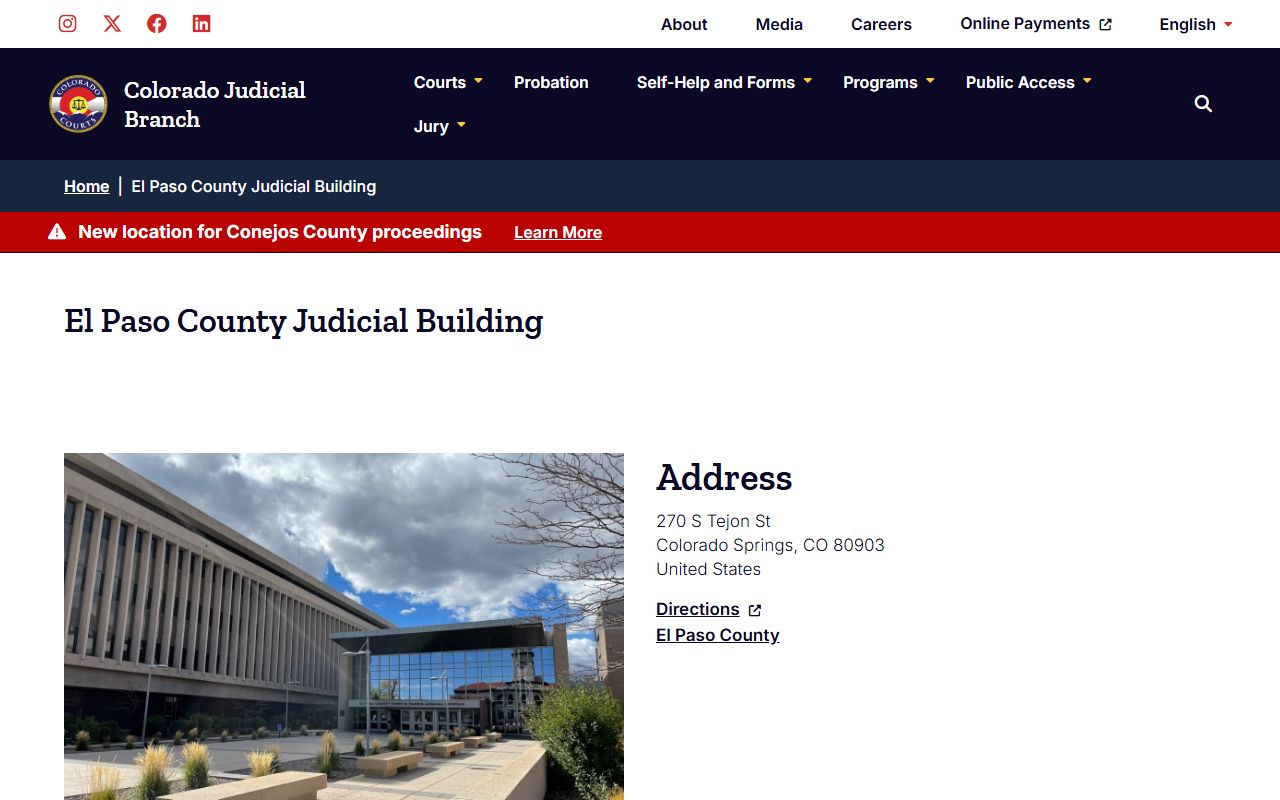
The El Paso County Judicial Building houses probate court operations and records for the region.
Business hours accommodate the public. The court opens weekdays. Extended hours may apply to some departments. The downtown location is accessible. Parking options are available nearby.
El Paso County provides comprehensive court services including probate case management and records access.
El Paso County Estate Record Types
El Paso County generates many probate records. The large population creates volume. Understanding the types helps.
Decedent estate files are most common. These contain wills and codicils. Inventories list all property. Accountings track distributions. Creditor claims are filed. Final reports close cases.
Informal probate handles most estates. No hearings are required. The process moves efficiently. Personal representatives work independently. Court oversight is minimal. Records are still thorough.
Formal probate manages disputes. Court hearings occur regularly. Judges supervise closely. Evidence is presented. The record is complete. Transcripts document everything.
Guardianship cases protect minors. Incapacitated adults also receive help. Medical evidence is filed. Background checks are done. Annual reviews are mandatory. The court maintains detailed files.
Conservatorship records are extensive. Financial management is documented. Every dollar is tracked. Accountings are detailed. Bonds are required. The court reviews annually.
How to Access El Paso County Probate Records
El Paso County offers robust access options. The large court system is well-equipped. Multiple methods work well.
Online requests are processed efficiently. Use the Judicial Branch request form. Complete all required information. Case numbers speed processing. Include full names and dates. Submit electronically. Response times are prompt.
The statewide docket search is comprehensive. It covers El Paso County extensively. Search by name anytime. Results are instant. Basic case data appears freely. Full records need formal requests.
In-person service is excellent. The Judicial Building has public terminals. Staff assists visitors. Copy services are available. Same-day processing is common. The facility handles volume well.
Mail requests are accepted. Write to 270 S Tejon Street. Include specific details. Enclose proper payment. Allow standard processing time. The court mails copies promptly.
Phone inquiries are welcome. Call for general questions. Staff provides guidance. Complex requests need written forms. But initial questions can be answered by phone.
El Paso County Probate Search Guide
Finding records in El Paso County is straightforward. The systems are modern. Volume requires organization. These tips help.
Use exact legal names. Spelling is critical. The database is large. Variations may not match. Include middle names. Initials help too. Be precise in your search.
Dates organize the files. Know the death year. This is essential. The year forms the base. Month narrows results. Exact dates are best. Approximate dates work with fees.
The 4th Judicial District is large. Many cases flow through here. The court has efficient systems. Digital records are extensive. Recent cases are easiest. Older cases may need Archives contact.
Colorado Springs is the urban center. Most county residents live here. But the county is large. Rural areas are included. Military families are common. Fort Carson adds unique cases.
Case numbers are powerful tools. They bypass name searches. Files are pulled directly. Processing is fastest. Include numbers when possible. Check any prior documents.
El Paso County Probate Laws
El Paso County follows Colorado probate code. Title 15 applies fully. Local rules add procedures. Know both frameworks.
The 120-hour rule is enforced. Wait five days after death. Then file probate. This is mandatory. Early filings are rejected. The court checks dates carefully.
Creditor claims have time limits. The 45-day rule applies. Notice must be given. Claims are reviewed. Valid debts are paid. The process is orderly.
Small estates use affidavits. The limit is $80,000. No full probate is needed. The affidavit is simple. Heirs collect assets directly. This saves court time.
Three years is the deadline. File probate within this period. After that, options narrow. Late probate is difficult. Alternative procedures exist. But they are complex.
4th Judicial District Counties
El Paso County shares judicial district boundaries with this neighboring county: