
Access Colorado Probate Court Records
Colorado probate court records document how estates are settled after someone passes away. These files include wills, estate inventories, creditor claims, and final distributions to heirs. The Colorado Judicial Branch maintains these records through District Courts in each county. You can search for probate filings, request copies of wills, or review guardianship and conservatorship cases across all 64 counties in the state.
Colorado Probate Records Quick Facts
Where to Find Colorado Probate Court Records
Colorado probate records are kept in several places across the state. District Courts hold active cases and recent filings. The Colorado State Archives stores older records from before 1985. Each source serves a different need depending on the age of the case and what documents you require.
District Courts are the primary source for probate matters in Colorado. Every county has a District Court that handles estate administration, will probate, and guardianship appointments. These courts maintain files for cases filed from the mid-1980s to the present day. You can visit the Clerk of Court office in person to view files or submit a request online through the Judicial Branch website. The court charges fees for copies and certified documents.
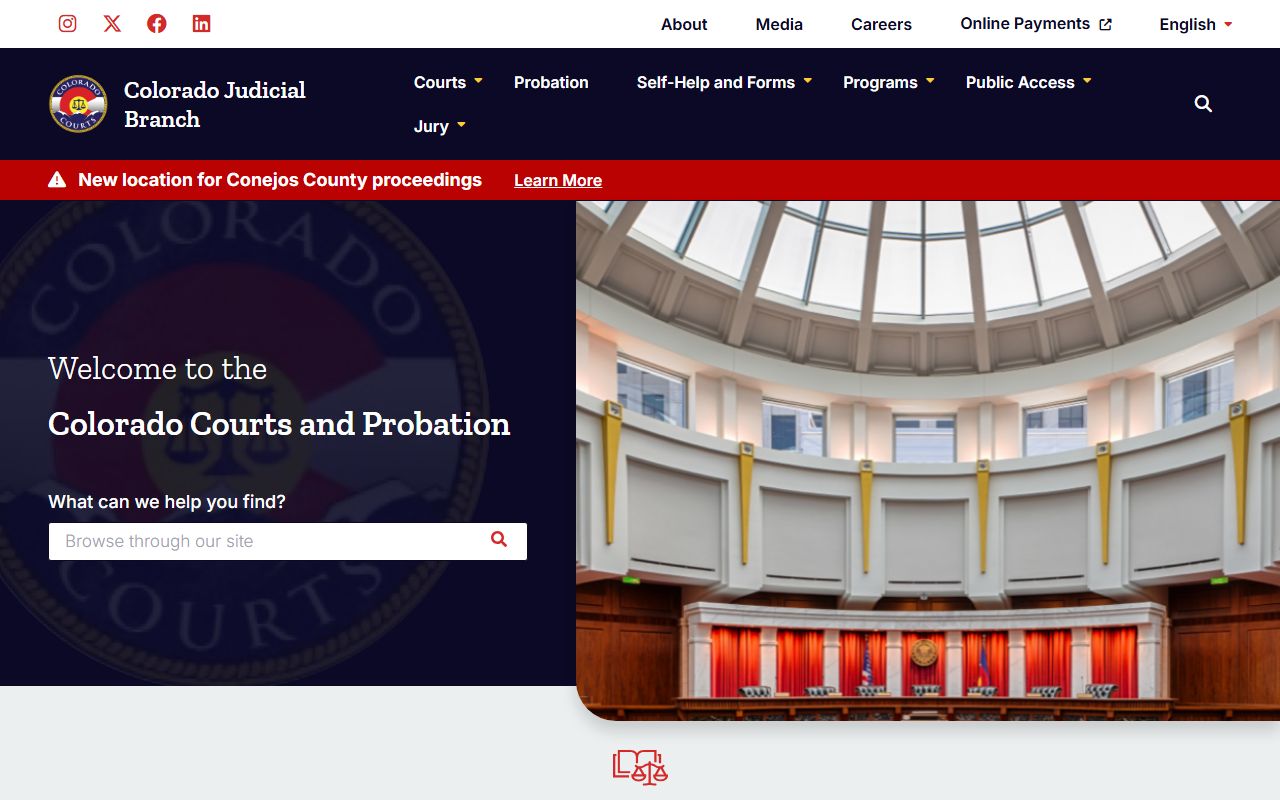
The Colorado Judicial Branch website provides statewide access to court resources and records request forms.
The Colorado State Archives holds probate records from 1874 through the 1980s. These historical files include estate papers from the earliest days of Colorado statehood. You can search the Archives database by name to find older cases. If you locate a record, note the county and case number. Then contact the Archives to request copies. Older records may take longer to retrieve since they are stored offsite.
Denver County operates a separate Probate Court. This court has exclusive jurisdiction over all probate matters in Denver. It is not part of the District Court system. The Denver Probate Court handles estates, guardianships, conservatorships, and mental health proceedings for Denver residents. You can request records from this court through its dedicated records request process.
How to Search Probate Records in Colorado
Finding probate records in Colorado requires knowing where to look and what information to provide. The search method depends on whether the case is recent or historical. Different courts offer different search tools.
For recent probate cases, start with the District Court where the person lived. The Colorado Judicial Branch provides a free online docket search tool. You can search by name, case number, or date range. This tool shows basic case information like filing dates and case status. It does not show full document images. To see actual documents, you must request copies from the court.
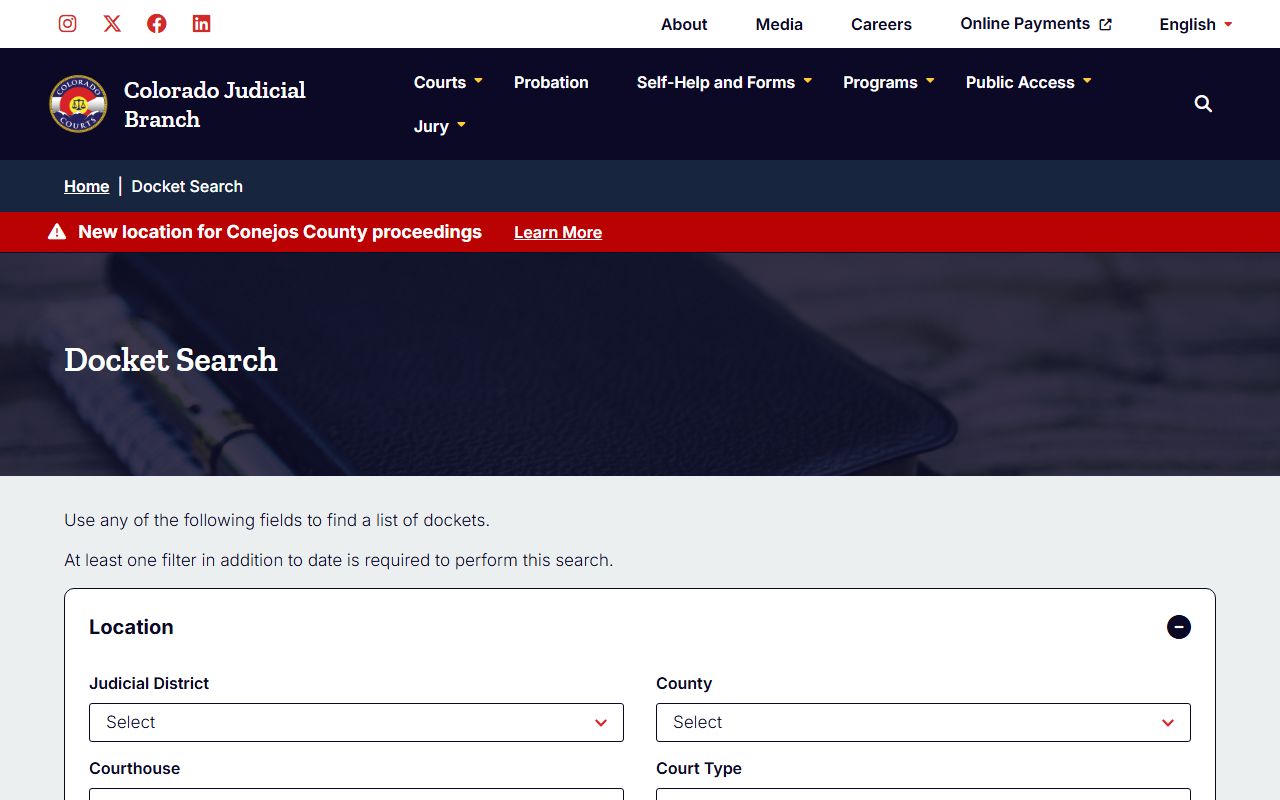
Use the statewide docket search to locate probate cases across all Colorado counties.
Third-party vendors also offer Colorado court record searches. LexisNexis operates the Colorado Courts website at cocourts.com. Tessera Data provides another option for searching court records. These services charge fees but may offer more search options than the free state tool. Remember that commercial sites cannot provide actual document copies. You must still contact the court for those.
To search the Colorado State Archives for historical probate records, visit their online search portal. Enter the name of the deceased person. The database will show if the Archives holds a file for that individual. You need both the county name and case number to request the file. If the name does not appear, the case is not at the Archives. Contact the District Court directly for those records.
Types of Colorado Probate Court Records
Probate courts in Colorado handle several types of cases. Each creates a different kind of record. Understanding these differences helps you know what to request.
Estate probate is the most common type of case. When someone dies, their estate goes through probate. The court supervises the distribution of assets to heirs. Estate records include the will, inventory of property, creditor notices, and final accounting. These files show what the person owned and who inherited it.
Informal probate is a simpler process. The court appoints a personal representative without a hearing. This works when no one contests the will. Formal probate requires court hearings and judicial oversight. It is used when disputes arise or when only a copy of the will exists.
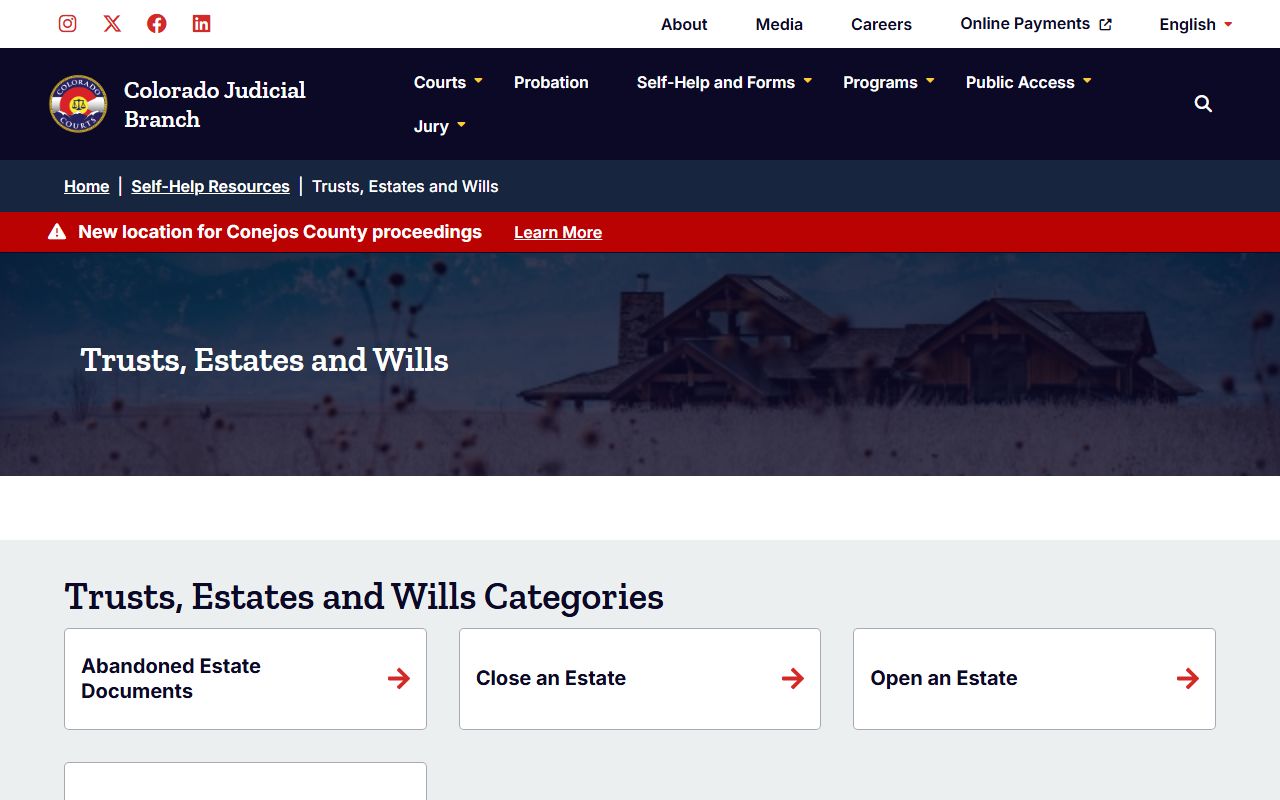
The Judicial Branch provides trusts, estates, and wills resources to help navigate probate processes.
Guardianship records involve minors or incapacitated adults. A guardian makes personal decisions for someone who cannot make them alone. Conservatorship records involve managing money and property for someone unable to do so. These cases create detailed records about the protected person's needs and finances.
Small estate affidavits allow simpler transfers when the estate value is under $80,000. No full probate is needed. The heir files an affidavit with the court instead.
Colorado Probate Laws and Rules
Colorado probate law comes from Title 15 of the Colorado Revised Statutes. This is called the Colorado Probate Code. It covers all aspects of estate administration, wills, and protective proceedings. The code establishes how courts handle these matters statewide.
Article 10 of the Probate Code sets general provisions and definitions. It explains key terms used in probate cases. It also establishes which courts have jurisdiction over probate matters. District Courts handle probate in every county except Denver. Denver has its own Probate Court.
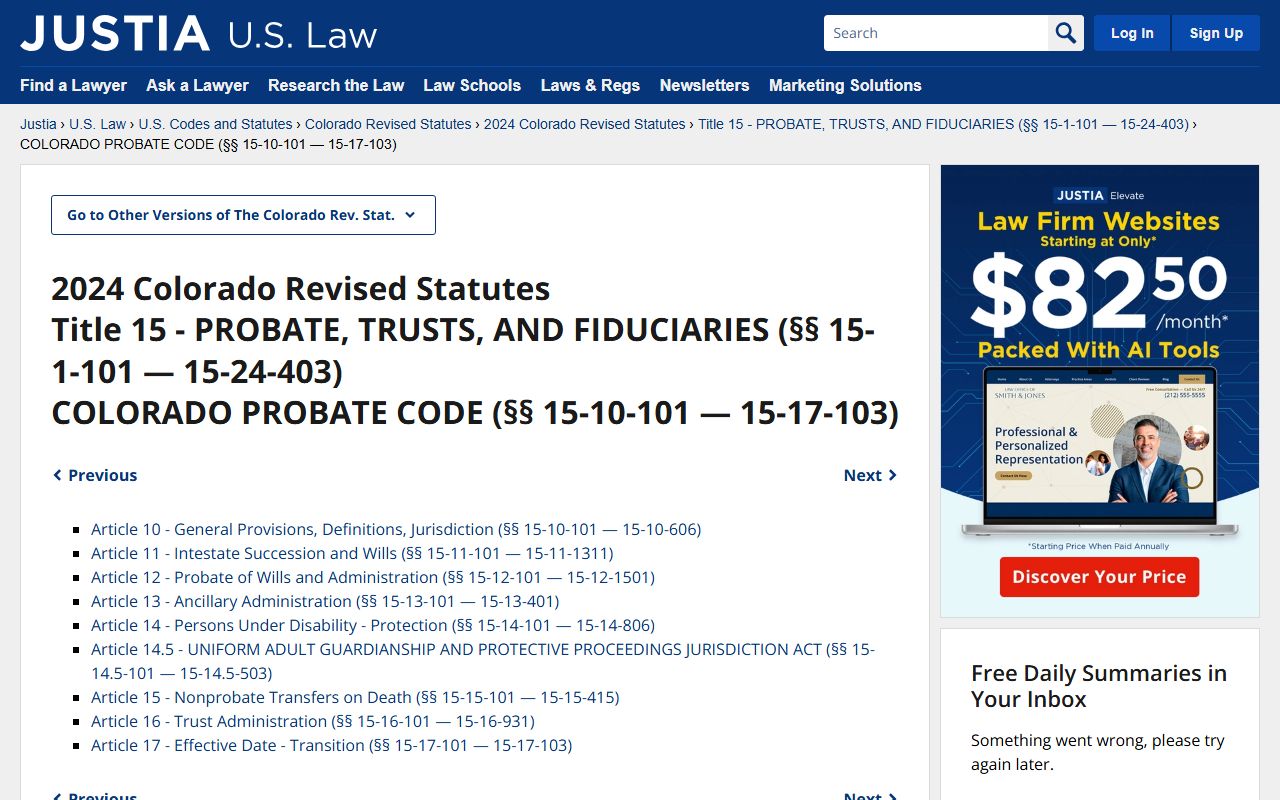
The Colorado Probate Code governs all estate and probate matters in the state.
Article 11 covers intestate succession and wills. It says who inherits when there is no will. It also sets rules for making a valid will. Under Section 15-11-501, any person aged 18 or older who is of sound mind may create a will.
Article 12 governs probate of wills and estate administration. It explains both informal and formal probate procedures. Section 15-12-1201 allows collection of personal property by affidavit for small estates. Section 15-12-1203 provides summary administrative procedures for qualifying estates.
Article 14 addresses protective proceedings. This includes guardianships and conservatorships. These laws protect minors and incapacitated adults who cannot care for themselves or their property.
Section 13-32-102 establishes filing fees for probate cases. As of January 2025, the first filing for a decedent's estate costs $229. Small estate filings cost $113. These fees help fund court operations across Colorado.
Probate Court Fees in Colorado
Filing for probate in Colorado involves several types of fees. The court charges filing fees when you open a case. Additional fees apply for copies, certifications, and other services.
The current filing fees for probate cases include:
- First filing for decedent's estate: $229
- Small estate filing: $113
- Supervised administration: $198
- Trust registration statement: $198
- Petition for trust action: $229
- Deposit of will: $18
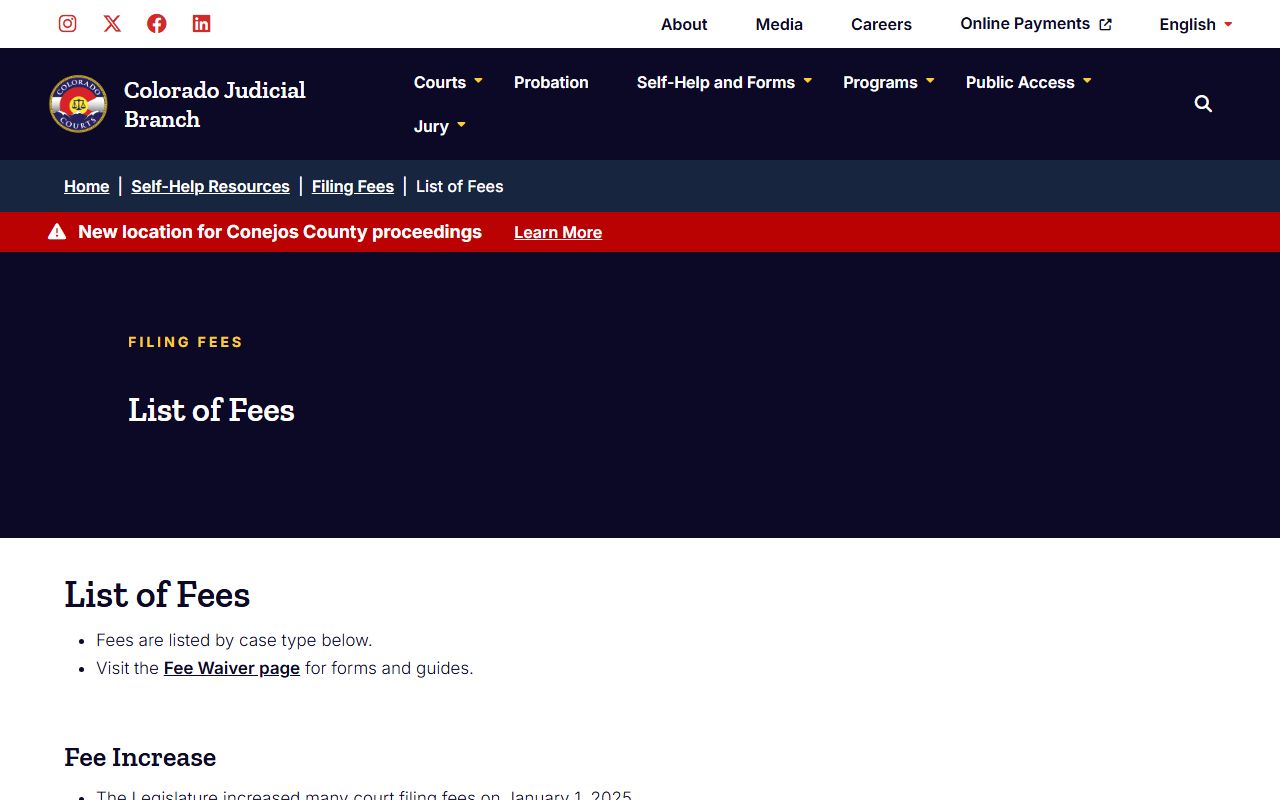
View the complete court fees list for all probate and court filing costs.
Copy fees vary by court. Most charge $0.25 per page for standard copies. Certified copies cost $20 per document. Name searches typically cost $5. Research fees may apply if staff must spend more than an hour locating records.
The Colorado State Archives has its own fee schedule. Copies cost $20.50 for up to 10 pages. Larger requests cost more based on page count. Certification adds $16 per record.
Note: Fees change periodically. Contact the court or check online before filing to confirm current costs.
How to Request Probate Records in Colorado
Getting copies of probate records requires submitting a formal request. Colorado courts accept requests in several ways. Choose the method that works best for your situation.
The online records request form is the easiest option. Visit the Colorado Judicial Branch website and complete the form. You will need the case number if you have it. If not, the court can search by name for a fee. Include the names of the parties, date of death, and county where the case was filed. Most requests are processed within three business days.
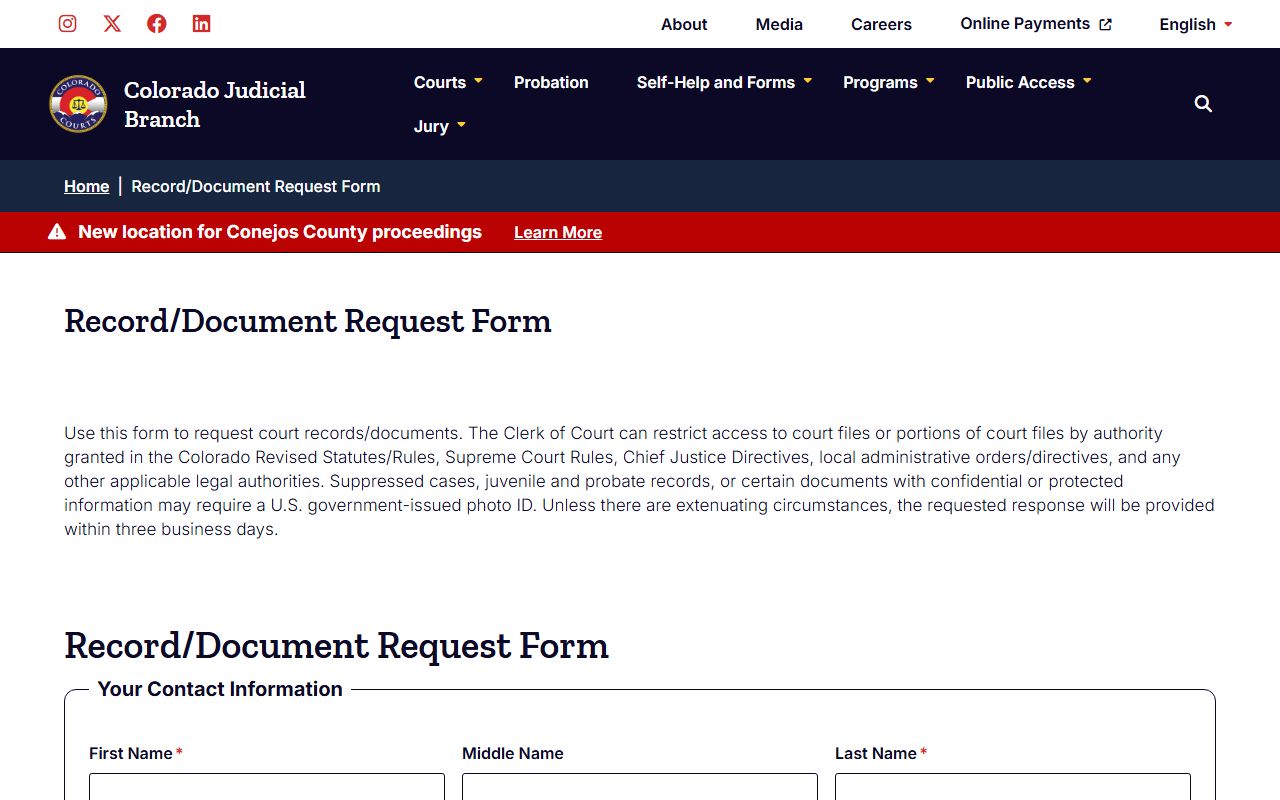
Submit record requests through the online records request form for any Colorado court.
You can also request records by mail. Send a letter to the Clerk of Court at the courthouse where the case was filed. Include all relevant details to help staff locate the file. Enclose payment for any fees. Mail requests take longer than online submissions.
In-person visits allow same-day service in many cases. Go to the Clerk of Court office during business hours. You can view files and request copies on the spot. Bring identification and payment for fees. Some probate records may require government-issued photo ID to access.
Denver Probate Court has its own request process. You can submit requests online, by phone at 303-606-2303, by mail, or in person. The court does not accept pro se filings by fax or email.
Important Time Limits for Colorado Probate
Colorado law sets specific time limits for probate matters. Knowing these deadlines helps ensure you handle estate matters properly.
The 120-hour rule is critical. You cannot file a probate petition until 120 hours (5 days) have passed since the death. This waiting period allows time for funeral arrangements and initial family matters. Creditors must wait even longer. They cannot file for probate until 45 days after the death.
The statute of limitations for probate is three years. You must initiate probate within three years of the death. After that, the will cannot be probated. Heirs may still claim property through other legal means, but the formal probate process is no longer available.
Small estate affidavits have no strict time limit. However, most people file them within a few months of death. The sooner you file, the easier it is to collect assets.
Are Probate Records Public in Colorado
Most probate records are public in Colorado. Anyone can request to view or copy these files. However, some restrictions apply to protect sensitive information.
Standard estate probate files are open to the public. You can see wills, inventories, and accountings. These documents show how estates are managed and distributed. The public nature of these records helps ensure transparency in estate administration.
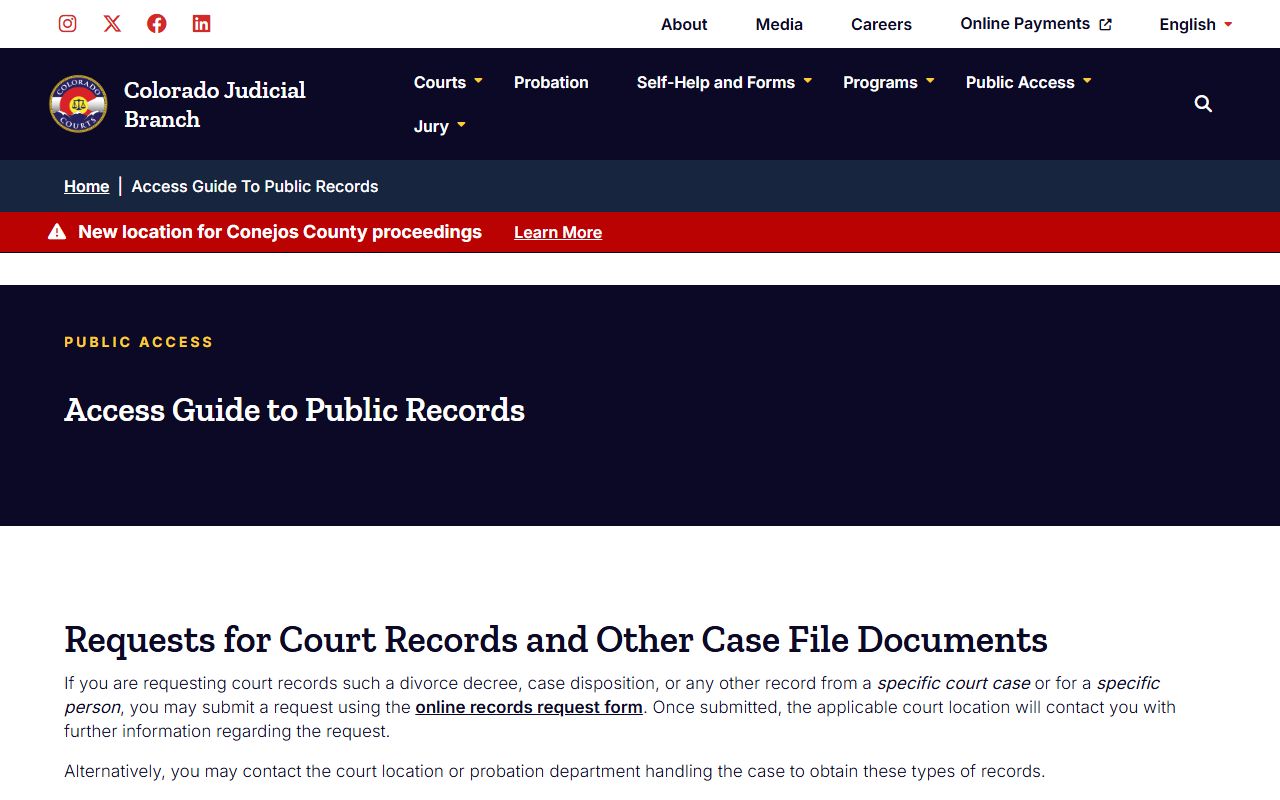
The public records access guide explains what court records are available and how to request them.
Guardianship and conservatorship records have more restrictions. These cases involve vulnerable people. Courts limit access to protect their privacy. Only parties to the case and their attorneys can view these files without a court order. Others must petition the court for access.
Cases involving minors are also restricted. The court may seal parts of the record to protect the child. Adult parties can still access their own records with proper identification.
You may need to show government-issued photo ID to access certain probate records. This helps protect confidential information from improper disclosure.
Browse Colorado Probate Court Records by County
Each of Colorado's 64 counties handles probate matters through its District Court. Select a county below to find local contact information and resources for accessing probate records in that area.
Probate Records in Major Colorado Cities
Colorado residents in major cities file probate cases with their county District Court. Choose a city below to learn about accessing probate records in that area.