
Logan County Wills and Probate Cases
Logan County probate records are maintained at the Combined Court in Sterling. The court processes estate filings and guardianship cases for the county. The 13th Judicial District serves this northeastern Colorado community.
Logan County Probate Court Location
The Logan County Combined Court handles all probate matters for Logan County. This includes estate administration, will probate, guardianship appointments, and conservatorship cases. The court serves residents throughout the county and surrounding areas.
You can visit the Clerk of Court office during business hours to view probate files in person. The office is located at 110 N. Riverview Road, Room 205, Sterling, CO 80751. Staff can help you locate specific cases and request copies of documents. Bring proper identification and any relevant case information to speed up your search.
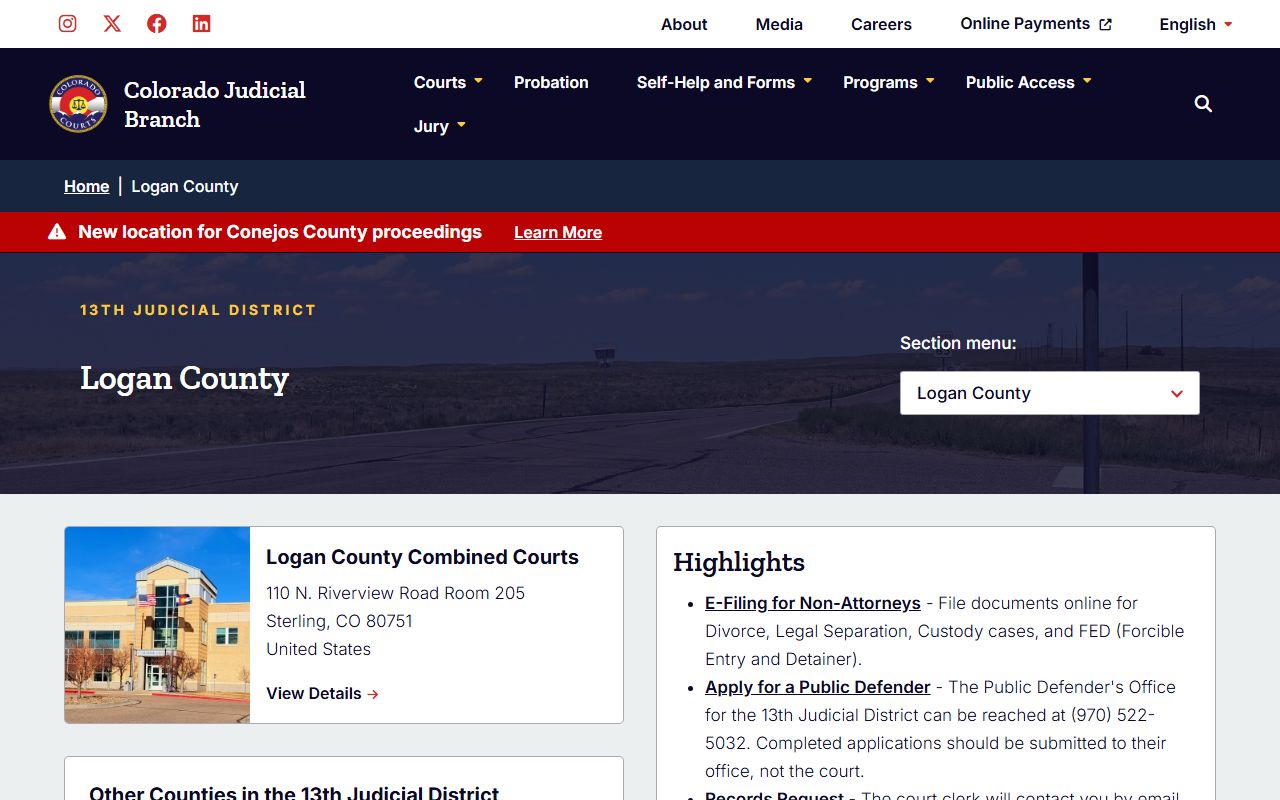
The Logan County Combined Court serves Logan County residents for all probate matters.
Contact the court directly for current hours and procedures. Court staff can explain how to request records and what fees apply. Some services may require advance notice or appointments.
Logan County Court Contact Details
Reach out to the court using the following contact information. Staff can answer questions about probate procedures, records requests, and filing requirements.
Phone: (970) 522-6565
Email: logan@judicial.state.co.us
Judicial District: 13th (with Kit Carson, Phillips, Sedgwick, Yuma)
Visit the court website for additional information and online resources.
How to Access Logan County Probate Records
There are several ways to access probate records in Logan County. Each method suits different needs depending on the age of the case and the type of documents you need.
For recent cases, visit the Clerk of Court office in person. You can view files and request copies during business hours. The court maintains records for cases filed from the mid-1980s to the present. Bring identification and any case information you have.
The statewide docket search helps you locate cases before visiting. Search by name to find case numbers and filing dates. This free tool covers all Colorado District Courts. It shows basic case details but not full document images.
You can also request records by mail or online. Submit a records request form through the Colorado Judicial Branch website. Include the case number, names of parties, and approximate filing date. Allow several business days for processing.
Logan County Clerk and Recorder
The Logan County Clerk and Recorder maintains land records and property documents. These records may relate to probate cases involving real estate transfers. You can search recorded documents through their office.
Visit the Logan County Clerk and Recorder website for online document searches. Property records often contain important details about estate assets and transfers. These documents complement court probate files.
Land records show how property passed from deceased owners to heirs. Deeds, mortgages, and liens all appear in these files. Review both court and land records for a complete picture of estate settlements.
Types of Logan County Probate Records
Logan County probate courts handle several types of cases. Each creates distinct records that serve different purposes. Understanding these differences helps you find the right documents.
Estate probate is the most common case type. When someone dies, their estate goes through probate. The court supervises asset distribution to heirs. Records include the original will, estate inventory, creditor notices, and final accounting. These files show what the person owned and who received it.
Informal probate offers a simpler process. The court appoints a personal representative without a hearing. This works when no one contests the will and all heirs agree. Formal probate requires court hearings. Judges oversee the process when disputes arise or when only a copy of the will exists.
Guardianship records involve minors or incapacitated adults. A guardian makes personal decisions for someone unable to do so. Conservatorship records involve managing finances and property. These cases create detailed records about the protected person's situation.
Small estate affidavits allow simpler transfers. When an estate is worth less than $80,000, heirs can use an affidavit instead of full probate. This faster process avoids lengthy court proceedings. The affidavit is filed with the court but requires minimal supervision.
Searching Logan County Probate Records
Finding specific probate records requires some basic information. The more details you have, the easier your search will be. Start with the full name of the deceased person and approximate date of death.
Case numbers are the most precise way to locate files. If you know the case number, the Clerk can pull the file quickly. Without it, staff can search by name. Name searches may take longer and could require research fees.
Probate cases are public records in Colorado. Anyone can request to view or copy these files. Some restrictions apply to guardianship and conservatorship cases involving living persons. These files may require a court order to access.
When searching online databases, try different name variations. People may have used nicknames or middle names in legal documents. Check for spelling variations too. Historical records often contain name errors or abbreviations.
Colorado Probate Laws and Rules
All Logan County probate cases follow the Colorado Probate Code. This is Title 15 of the Colorado Revised Statutes. It governs estate administration, wills, and protective proceedings statewide.
Article 10 establishes general probate provisions. It defines key terms and explains court jurisdiction. Article 11 covers intestate succession and wills. It states who inherits when there is no will. It also sets rules for making valid wills.
Article 12 governs probate procedures and estate administration. It explains both informal and formal probate processes. Article 14 addresses guardianships and conservatorships. These laws protect minors and adults who cannot care for themselves.
Probate cases must follow specific time limits. You cannot file a probate petition until 120 hours after death. The statute of limitations for probate is three years. After that, the will cannot be probated through normal channels.
Other Colorado Counties
Find probate records for other Colorado counties through the links below. Each county page provides local court contact information and records access details.